Forever Gone But Always Exists (2023-2024)
"All conditioned phenomena are like a dream, an illusion, a bubble, and a shadow; like dew and a flash of lightning. Thus we shall perceive them as such.” — Diamond Sutra.
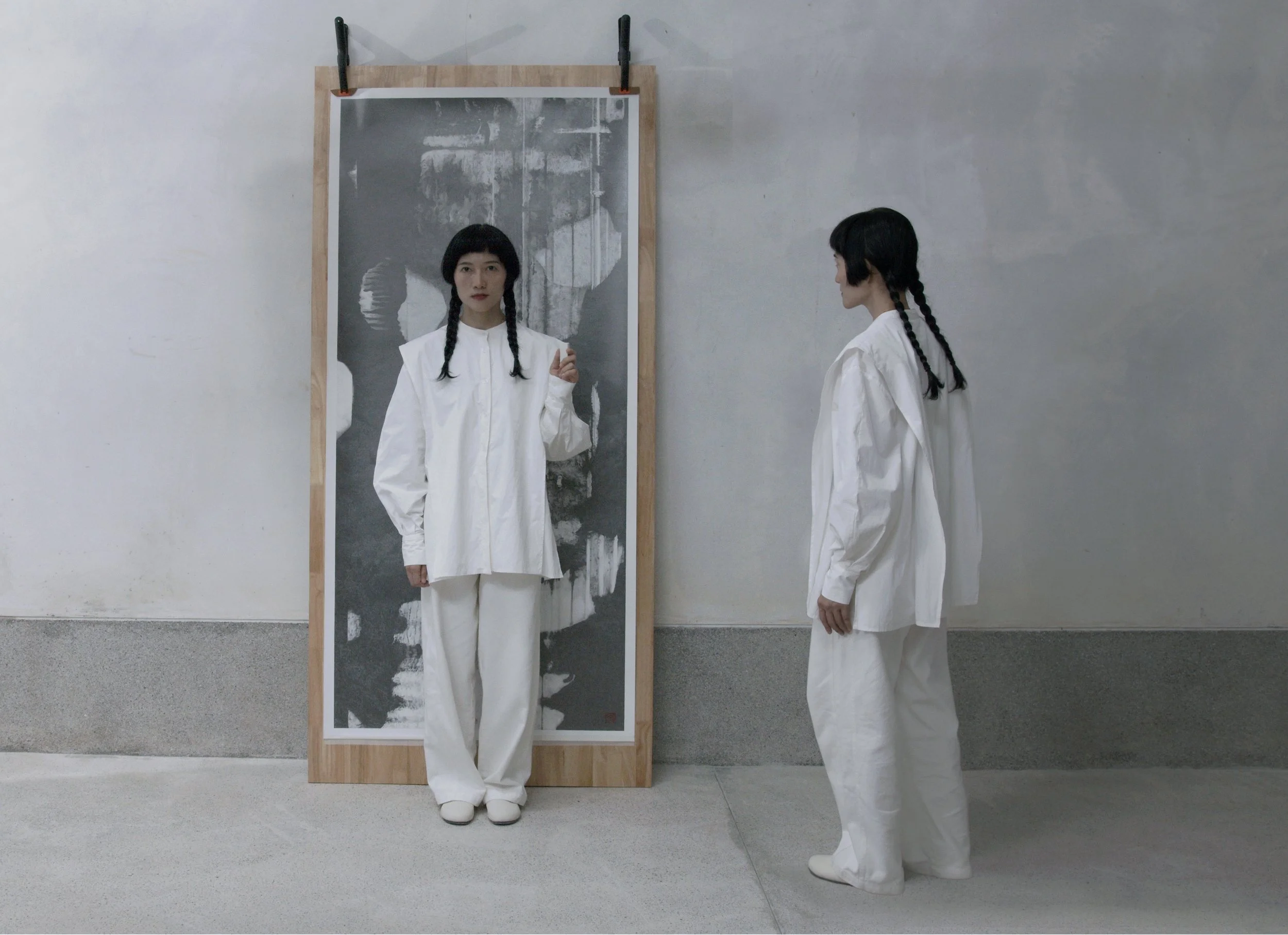
"Forever Gone But Always Exists" is the artist’s avenue in challenging the conventional ideas of time and permanence. She explores the nuances of memory, life, and the eternal imprint that transitory things leave behind on the axis of time. By doing so, she invites the viewers to reflect on the paradox of ephemerality — what has occurred does not go unnoticed; what has perished has merely changed its form of existence.
Through the potent medium of performance art, “Forever Gone but Always Exists” allows the viewers to investigate the delicate equilibrium between the passing of time and abiding repercussions, enabling them to elicit a wide spectrum of reactions and interpretations. Inspired by various literature materials such as the Diamond Sutra as well as her personal experience, the artist meditates on the constant cycle of constructing and destructing in her artistic career, and extends her contemplation to the search for true meaning of life as a journey. While the physical body serves as an ephemeral vehicle, are we too obsessed with the sense of objects or are the worldly pursuits simply inevitable?
During the exhibition opening, a symbolic performance unfolds. The artist meticulously erases the big drawing, accompanied by a live sound arrangement and literature recitation by the artist. The pencil-on-paper drawings serve as a visual exploration in relation to the transitory subject matter and a relic of the performance, to delve into the transient nature of the body and the artist’s own creations—a process of creation through erasure.
This exhibition sets the tone for a year full of provocative creative encounters. For an exploration of the fundamental and timeless domains of artistic expressions that will stimulate conversation about the fleetingness of life and the eternal value of past experience.‘Forever Gone But Always Exists’ constitute a series of erased graphite drawing on paper, photographic print on paper, video work and performance art.
An excerpt from the video work based on the same drawing series.
Script conceived & edited by Aiwei Foo / Filmed by Chai Ming Jiun / Sound design by Kent Lee
Single channel video / Duration: 3 minutes 30 seconds
The Light I Cannot Hold (2025)
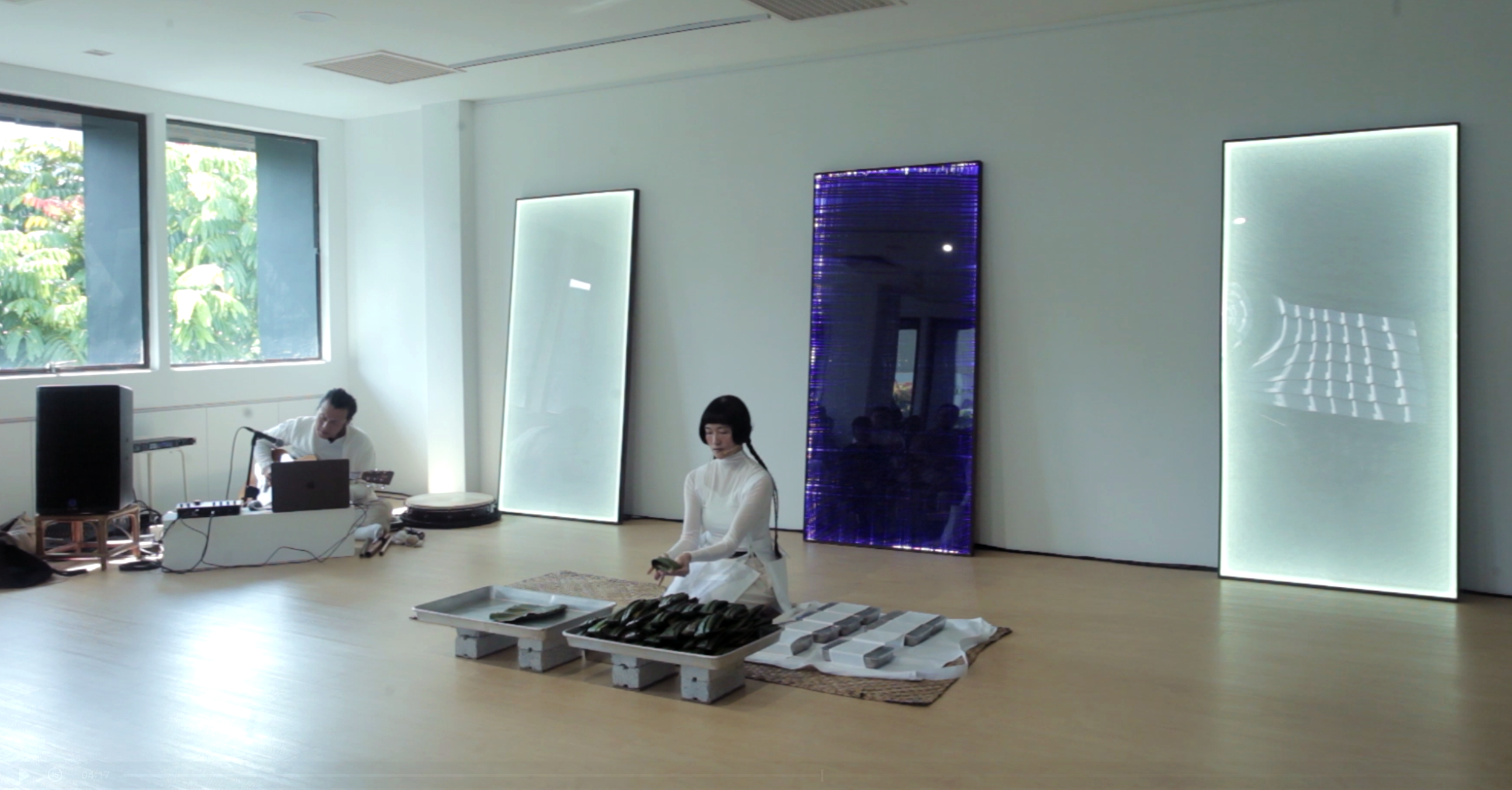
A live performance at the opening further develops the exhibition’s concerns. During the reception, the artist prepares and shares rice dumplings using ingredients and techniques rooted in Indigenous traditions from Sarawak, accompanied by the meditative sound structures present in her practice.
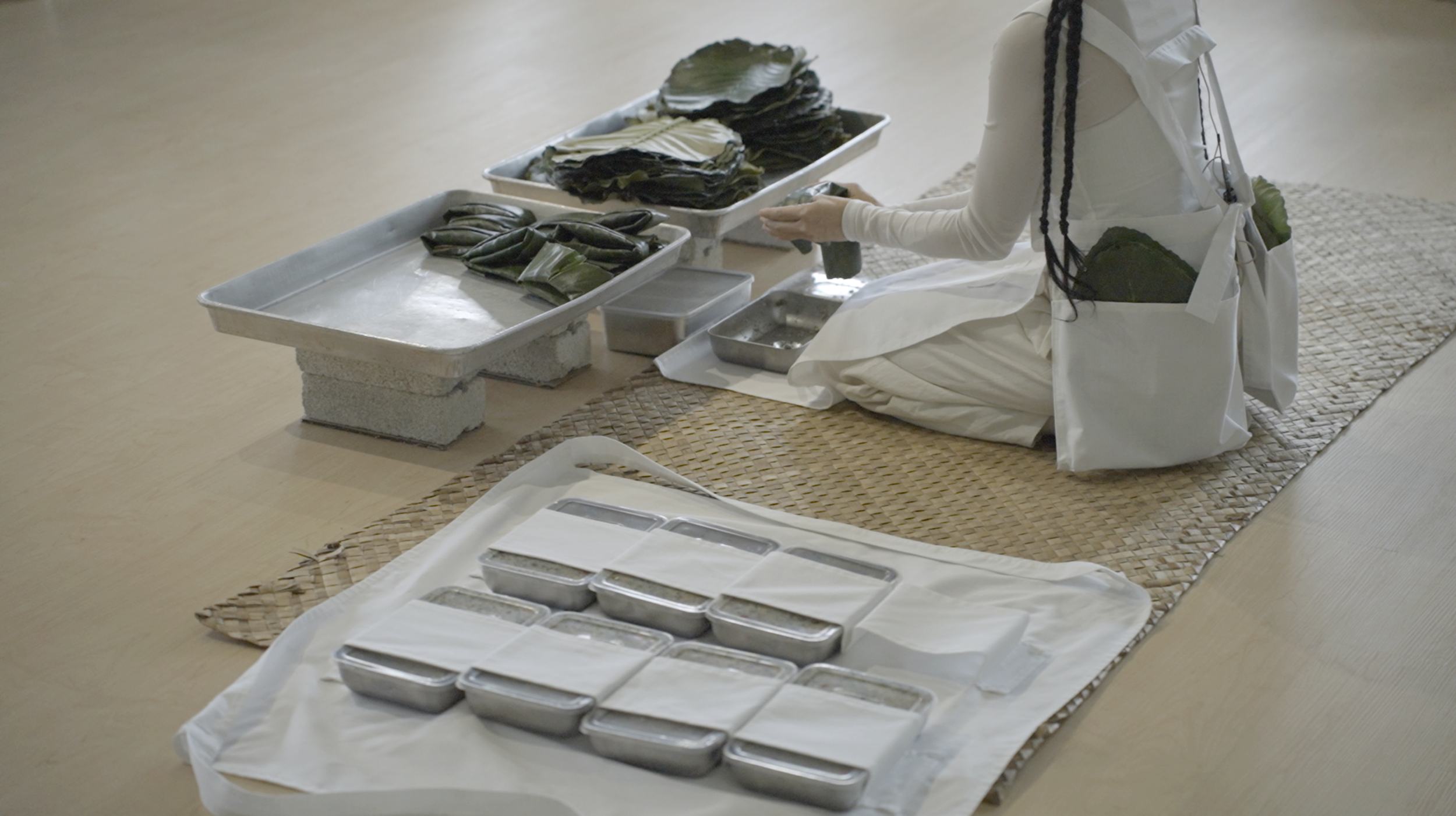
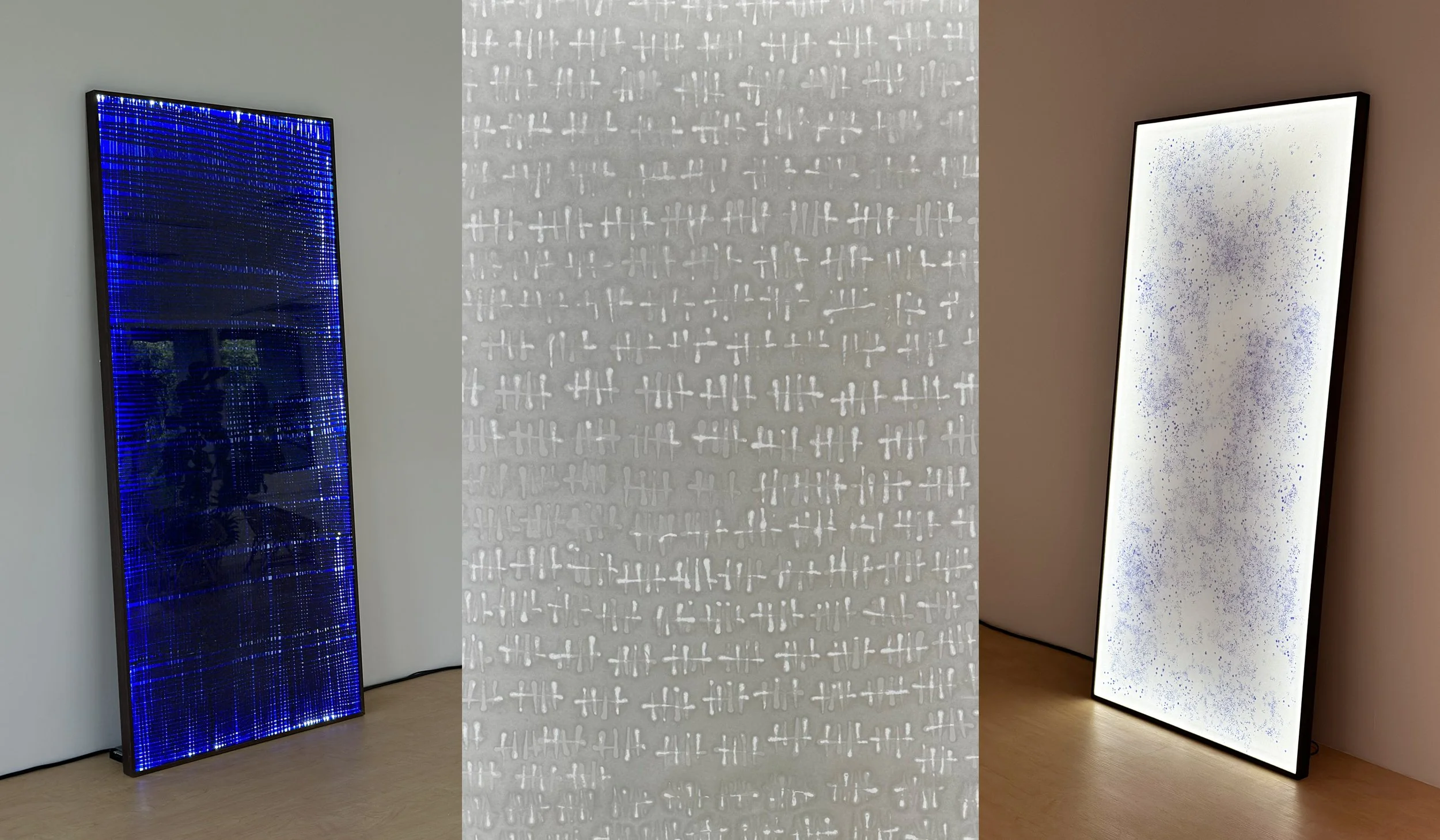
The Light I Cannot Hold. Aiwei Foo’s new body of works examines the connection between migration, personal memory, and the environmental and economic conditions shaping Sarawak. Born in Miri, Aiwei Foo recalls moonlight casted on her childhood bed. The exhibition title refers to this private memory and lightly echoes the familiar imagery in Li Bai’s poem Quiet Night’s Thought, which evokes longing for one’s place of origin.
The works presented investigate what remains once a person leaves home. Foo records streets she once walked in Sarawak, the names of strangers from Borneo who have relocated, and the conversion of forests into extractive resources. Rather than producing explicit representations of these subjects, she uses carbon paper, erasure, pepper, palm oil, and tree branches as material methods for documenting traces that are at risk of disappearing. These materials reflect both significant industries in Sarawak and components of daily life.
In A Copy of the Invisible, street names and personal names are written then erased. The paper surfaces retain only faint indentations while the reverse holds the transferred inscriptions. This approach highlights the difficulty of maintaining a record of lived experience. Individuals who move away often lose visibility within the communities they left behind. Their histories may continue to exist, but not always in ways that are easily retrieved.
Other works focus on environmental changes in Sarawak where forests have been reduced for timber export and the expansion of palm oil plantations. Foo applies tally marks using a tree branch to count what is being removed. The tally system references industrial methods of quantification while underscoring how natural resources are translated into numerical data. In a related work, palm oil is used to create marks that remain permanently visible on the paper. The choice of material refers to both its economic significance and its environmental impact.
Pepper appears as another important export commodity linked to Sarawak’s history. By using pepper as a marking tool, Foo connects the domestic preparation of food with global trade. The repeated process of pounding pepper creates visible proof of production and labor. The work demonstrates how seemingly ordinary materials participate in economic systems that extend far beyond the household.
The final work combines used and unused carbon paper into a woven structure commonly found in Borneo. The woven surface brings together traces of erased content from previous works. It suggests that dispersed experiences and separate documents can retain a long lasting relationship when brought into contact. The structure reflects how communities maintain shared identity even when members are geographically separated.
Collectively, the works in this exhibition consider how migration affects what is remembered and what becomes less visible. Foo does not portray individuals or landscapes directly. Instead, she documents the challenges of preserving connection through methods that are not always visually prominent. Viewers are encouraged to examine the surfaces closely and to acknowledge the persistence of information that is not immediately apparent.
Through a quiet and systematic approach, the exhibition positions erasure and absence as forms of presence. The Light I Cannot Hold proposes that the effects of leaving are recorded through material, gesture, and trace, and that these remain active even when not easily seen.